





































29 Jul 26
Van Fans and Cargo Van Ventilation: A Fleet Buyer's Guide
 A work van spends its day sealed shut, and that is the problem. Park a cargo van in the sun with the doors closed and the interior turns into an oven, with heat soaking into whatever is stored in the back. Run it through a humid morning and moisture collects on the metal. Load it with certain materials, batteries, or equipment and the air in the cargo area gets worse, not better. None of this shows up on a spec sheet, but it wears on the vehicle, the cargo, and the person who climbs in and out of it all day.
Ventilation is the fix, and for a fleet it is one of the cheaper upgrades with an outsized effect. This guide covers why a sealed cargo van traps heat, moisture, and fumes, what a van fan actually does about it, and how to choose ventilation that fits every vehicle you run.
Already know you need it? See the VanFan roof ventilation unit.
Why a sealed cargo van traps heat, moisture, and fumes
A cargo area with no airflow has nowhere to send the heat that builds through the day, so temperature climbs and stays high long after the van is parked. That heat is hard on anything sensitive in the back, from adhesives and coatings to electronics and certain tools. On the moisture side, warm damp air meeting cold metal leaves condensation, and condensation over time means corrosion on the very panels an upfit is meant to protect. And depending on what the van carries, the sealed air can hold fumes and airborne gases that are simply not pleasant, or safe, to breathe in a confined space.
The through-line is that a closed box works against you. Without a way to move air, the cargo area holds onto everything you would rather it let go of.
What a van fan actually does
A van fan is a roof-mounted ventilation unit that moves air out of the cargo area and pulls fresh air through. The Legend VanFan mounts on the roof, mitigates the extreme heat that builds inside, and keeps a constant flow of fresh air moving through the cargo space. In doing that it also removes moisture and airborne gases, which is where the safety and the corrosion benefits come from. It sits low against the roofline, at just over two inches tall, so it does not turn the van into something that catches every parking garage, and the base unit can be opened and closed when you want to control airflow directly.
The point is not luxury. It is keeping the cargo area's air clean and its temperature down, so the van, its contents, and the person working out of it come through the day in better shape than they would in a sealed box.
.jpg) What poor ventilation actually costs a fleet
What poor ventilation actually costs a fleet
The cost of skipping ventilation is quiet but real. Heat build-up shortens the life of temperature-sensitive cargo and can leave a van unusable for certain loads in summer. Condensation feeds corrosion, which is exactly the long-term damage that eats into a vehicle's resale value. Trapped fumes are a safety and comfort issue for crews who spend the whole shift in and around the vehicle. Put together, a van with no way to breathe ages faster and works less comfortably than one that does, and across a fleet those small daily costs add up to real money.
What to look for in a van fan
If you are outfitting one van or a hundred, a few things separate ventilation that helps from a gadget that gets in the way.
A low profile that clears obstacles. A tall unit catches parking structures, branches, and car washes. A low-profile roof unit that sits close to the roofline stays out of trouble while still doing the job.
Real airflow, not just a vent. The goal is moving air, mitigating heat, and clearing moisture and fumes, not just a passive hole in the roof. Look for a unit built to keep a constant flow of fresh air through the cargo space.
Control when you want it. Being able to open and close the unit lets you manage airflow for what the van is carrying that day.
One standard across the fleet. The real win for a fleet is fitting the same ventilation to every vehicle, so every van behaves the same way and there is one spec to buy and maintain rather than a different solution per vehicle.
Pair ventilation with insulation
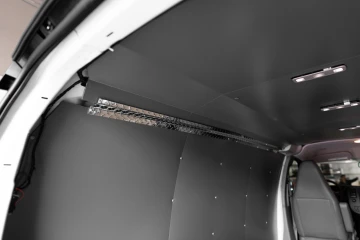
Ventilation and insulation solve the heat problem from two directions, and they work best together. A van fan moves hot air out and fresh air in. Insulated liners slow the heat coming in and hold a more stable temperature once it is there. DuraTherm insulated wall and ceiling liners protect the interior while adding a thermal barrier. A van that is both ventilated and insulated stays usable for temperature-sensitive work in conditions where a bare, sealed van simply would not. It is worth speccing the two together. See Legend's interior liners.
.jpg) The Legend model: spec'd by us, fitted local
The Legend model: spec'd by us, fitted local
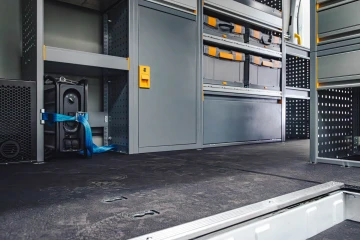
You do not have to choose between a national standard and a local install. Legend is the manufacturer, and the products are fitted through a certified upfitter network, so the two work together. You set the ventilation and interior standard for your fleet, we help you match the right products to each vehicle, and a certified upfitter near your operation handles the fitment. For Ford fleets, Legend has been part of the Ford ship-thru program since 2018, so the work can be built into the original vehicle order rather than added later.
That means a fleet running vans out of several cities can hold one spec while every vehicle still gets fitted close to home, with the same ventilation on every roof rather than a different fix in every market.
Get ventilation that fits your fleet
When you are ready, match the ventilation to your vehicles and your work, and pair it with insulation where heat is the enemy. Browse the VanFan unit, or tell us what your fleet drives and we will point you to the nearest certified upfitter.
See the VanFan ventilation unit. Find a certified Legend upfitter near you.
Frequently asked questions
Does a cargo van really need a fan?
Any van that gets sealed shut through the day builds heat, and depending on what it carries, moisture and fumes as well. A roof-mounted van fan moves that air out and keeps fresh air flowing, which protects temperature-sensitive cargo, cuts the condensation that leads to corrosion, and keeps the air breathable for the crew. For a working fleet it is one of the lower-cost upgrades with a real daily payoff.
What is the difference between a roof vent and a van fan?
A passive vent is a hole that lets some air escape. A van fan is a ventilation unit built to keep a constant flow of fresh air moving through the cargo area while mitigating heat and removing moisture and airborne gases. The Legend VanFan is roof-mounted and low profile, sitting just over two inches tall so it clears parking structures and car washes.
Can a van fan be opened and closed?
Yes. The base VanFan can be opened and closed, so you can control airflow for whatever the van is carrying that day.
Will ventilation help with condensation and rust?
It helps directly. Moving damp air out of the cargo area is what reduces the condensation that collects on cold metal and leads to corrosion over time. Pairing ventilation with insulated liners, which hold a more stable temperature, reduces it further.
Should I add insulation as well as a fan?
For heat, the two work best together. A van fan moves hot air out, while insulated liners like DuraTherm slow heat coming in and hold the temperature steadier. Speccing both keeps a van usable for temperature-sensitive work that a bare, sealed van could not handle.
Share Article